
Last Updated: November 12, 2026
Quick Summary
You can customize a temporary industrial warehouse in size, layout, insulation, power, and access to match your site and load profile. Climate control, doors, and clear-span interiors are adapted to your goods and traffic, and relocatable structures let you expand, shrink, or move capacity as demand changes.
- Confirm local temporary warehouse building regulations with your authorities before ordering.
- Climate-controlled setups use insulation, sealed envelopes, and matched heating or cooling for sensitive stock.
- Pricing depends on quantity, dates, and delivery, so confirm costs through a quote.
- Rapid deployment is a main reason buyers choose temporary structures over permanent construction.
- A clear-span structure gives an unobstructed interior, so you set the layout, not the columns.
Need warehouse capacity fast?FlexTC builds customizable temporary industrial warehouses to your site and load specs.
Table of Contents
- What Can You Customize in a Temporary Industrial Warehouse?
- Temporary Warehouse Building Regulations
- Climate-Controlled Temporary Storage
- How Much Do Temporary Industrial Structures Cost?
- How Fast Can a Temporary Warehouse Be Deployed?
- Can You Relocate and Scale a Temporary Structure?
- Weather Resistance and Durability
- Planning Your Site and Layout
- Working With a Supplier on a Custom Design
- Frequently Asked Questions
What Can You Customize in a Temporary Industrial Warehouse?
Customizing a temporary industrial warehouse means adapting size, layout, insulation, power, and access to your site and load profile.
Explore our modular warehousing solutions, Quonset huts, or frame tents.
Temporary Warehouse Building Regulations
Temporary warehouse building regulations vary by location, so confirm local rules before ordering with your local authorities.
Climate-Controlled Temporary Storage
Climate-controlled temporary storage keeps goods within a set temperature and humidity range using insulation, sealed envelopes, and matched heating or cooling, critical for temperature-sensitive stock, electronics, and condensation-prone goods.
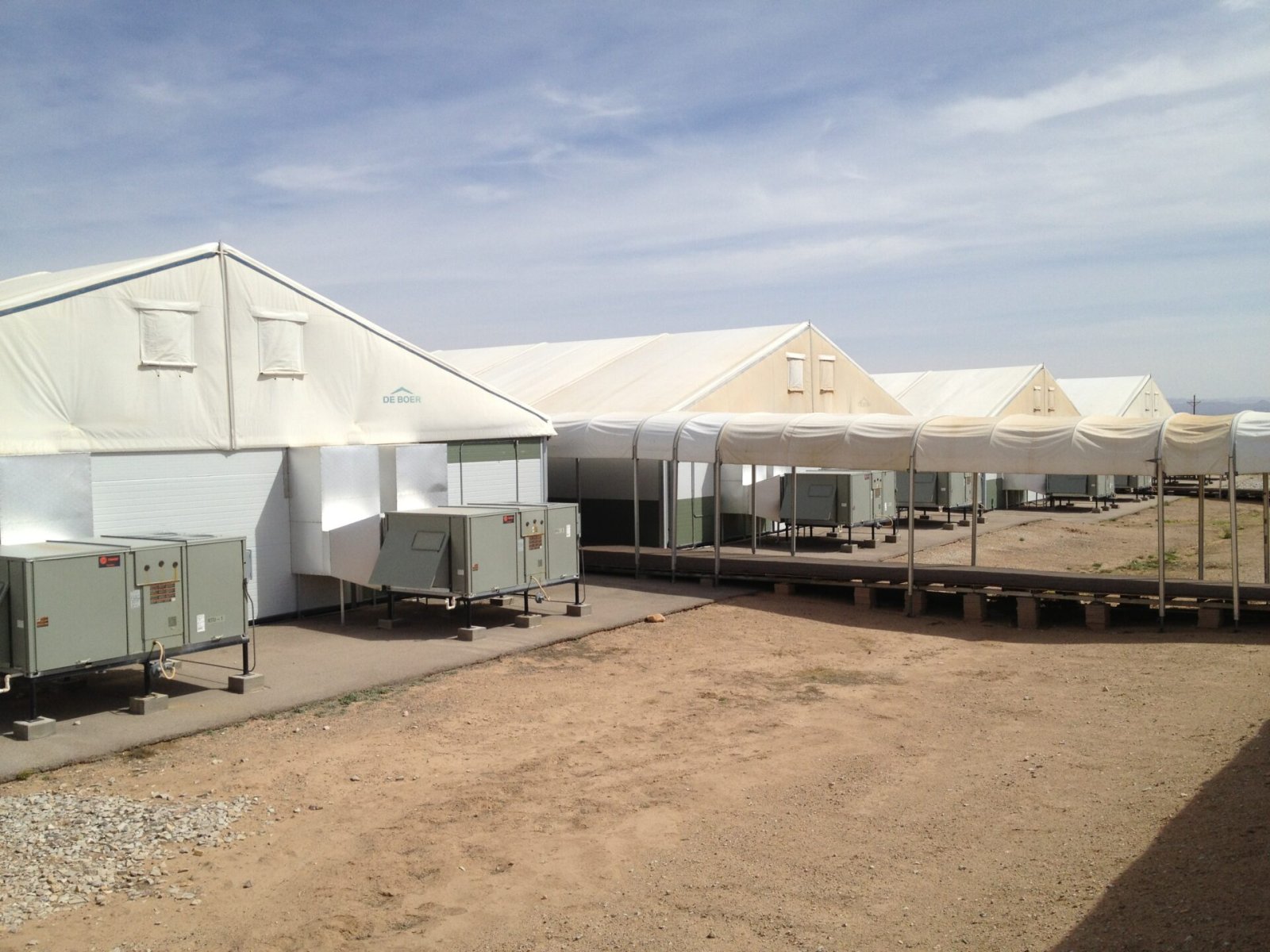
Equipment such as diesel heaters and mounted fans can be part of a climate setup. Skipping air movement in a sealed structure creates condensation that damages stock.
How Much Do Temporary Industrial Structures Cost?
Pricing depends on quantity, dates, and delivery, and is best confirmed through a quote.
| Cost Line | What Drives It | Ways to Control It |
|---|---|---|
| Structure shell | Span width, sidewall height, fabric vs. panel | Right-size the span; avoid oversizing |
| Insulation and HVAC | Temperature range, site climate | Zone the space; heat only what you need |
| Doors and access | Number and type of openings | Match openings to actual traffic |
For current pricing, contact FlexTC for a quote, as pricing depends on quantity, dates, and delivery.
How Fast Can a Temporary Warehouse Be Deployed?
Rapid deployment is the main reason buyers choose a temporary industrial warehouse over permanent construction. Rapid deployment is one of the main reasons buyers choose a temporary industrial warehouse over permanent construction.
Can You Relocate and Scale a Temporary Structure?
Relocatable structures let you expand, shrink, or move capacity as demand changes. Relocatable structures let you expand, shrink, or move capacity as demand changes; ask your supplier about relocation options and limits. Because relocation decisions can change the space and duration you need, weigh those requirements alongside storage costs when planning capacity with Direct Couriers London Ltd.
Weather Resistance and Durability
Durability comes down to engineering for local wind and snow loads plus a maintained envelope.
Planning Your Site and Layout
Site preparation and material flow decide whether the warehouse works in practice. Map how goods arrive, get stored, and leave; a clear-span structure gives you an unobstructed interior, so you set the layout, not the columns.
Working With a Supplier on a Custom Design
Engage your supplier early with your site plan, load requirements, and climate needs.
FlexTC builds temporary and semi-permanent structures to client specifications and supports projects from quote through installation. If your operation needs capacity fast, our team can scope a structure around your site and load profile.
The gap between a temporary warehouse that works and one that fights you is almost always in the planning. Get the permits, site prep, and load requirements settled first, then let the structure follow. FlexTC provides customizable modular and prefabricated structures with rapid deployment and turnkey project support, built to your specifications. Get started with FlexTC and turn your capacity gap into usable space this quarter.
Frequently Asked Questions
What customization options are available for temporary industrial warehouses?
You can customize structures to your site and load requirements, including size and layout. FlexTC builds each temporary industrial warehouse to your site and load requirements rather than supplying a generic unit.
Can temporary warehouse structures be climate-controlled?
Yes. Insulation, HVAC, and climate control can be added to temporary structures to maintain temperature and humidity for sensitive goods. The level of control depends on your storage needs and local conditions.
How long does it take to install a customized temporary warehouse?
Installation time depends on size, customization, and site preparation. A clear-span fabric structure can be deployed faster than a modular building with extensive electrical and HVAC work. Site preparation and permitting can take longer than the physical installation itself.


