
Last Updated: November 17, 2026
Quick Summary
Modular buildings install in three stages: design and permitting (2-6 weeks), off-site manufacturing (3-6 weeks), and on-site delivery and setting (1-2 days). Total order-to-occupancy timing depends on approvals, the manufacturing schedule, and site readiness, with schedule savings coming from overlapping site work and manufacturing.
- Design and approvals typically take 2-6 weeks before manufacturing begins.
- Off-site manufacturing and inspection usually run 3-6 weeks.
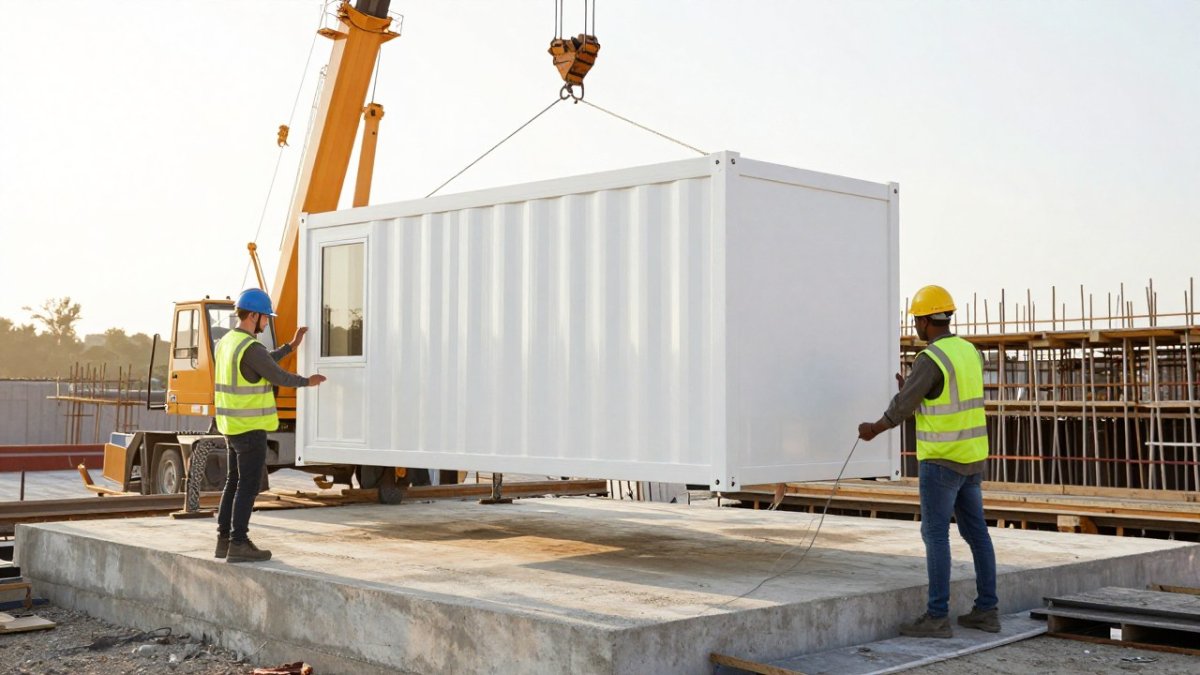
- Delivery and crane setting of modules takes only 1-2 days on site.
- Delays almost never come from the factory or crane but from permits, site readiness, and weather.
- Freeze the design before manufacturing starts, since change orders push the schedule.
How fast can your building be ready?FlexTC delivers modular buildings built to your specs, from design to handover.
Table of Contents
- How Fast Modular Buildings Install: The Three-Stage Timeline
- Temporary School Building Installation: What to Expect
- What Slows Modular Buildings Install Down, and How to Prevent It
- Frequently Asked Questions
How Fast Modular Buildings Install: The Three-Stage Timeline
Modular buildings install in three stages: design and permitting, off-site manufacturing, and on-site assembly. On-site work is typically the fastest of these stages, and total order-to-occupancy timing depends on the project's approvals, manufacturing schedule, and site readiness.
Most guides quote the crane day, but that is the shortest, most predictable phase. Planning a modular project typically means coordinating three tracks at once: approvals, factory work, and site work.
|
Stage |
What Happens |
Typical Duration |
|---|---|---|
|
Design and approvals |
Drawings, permits, site survey |
2-6 weeks |
|
Manufacturing |
Modules built off-site, inspected |
3-6 weeks |
|
Delivery and setting |
Transport, crane, module placement |
1-2 days |
The key word is "parallel", overlapping site work and manufacturing is where the schedule savings come from.
Temporary School Building Installation: What to Expect
Temporary school building installation follows the same three stages, but the school year sets a hard deadline, so schedules need to be planned backward from the required occupancy date.
A common mistake is ordering the building before the site is ready, modules arrive, the crane is booked, and the pad is not poured, costing more time than the entire assembly phase. If you are planning a campus expansion, modular school solutions show the range of classroom and gymnasium layouts available. Inspection time should be built into the schedule from the start.
What Slows Modular Buildings Install Down, and How to Prevent It
Delays in modular buildings install almost never come from the factory or the crane. They come from permits, site readiness, and weather.
Permits and approvals. A common cause of slipped schedules. Prevention: submit early, submit complete, and ask the authority what they need before you file.
Site preparation gaps. Foundation, utilities, and crane access must be ready before delivery. Prevention: treat site work as a parallel track with its own owner and deadline.
Weather. Crane lifts and module setting are weather-dependent. Prevention: build float days into the setting window and watch the forecast a week out.
Transportation and access. Wide loads, narrow roads, low bridges, and tight entrances cause problems. Prevention: run a route survey before manufacturing starts.
Change orders. Every design change after manufacturing begins pushes the schedule. Prevention: freeze the design before the factory cuts material.
Booking the crane before the foundation is signed off can lead to a wasted mobilization. If business continuity is a concern, modular office solutions and modular warehousing solutions are options to explore. For current pricing and availability, contact our team to map your dates against the three stages.
Modular construction is fast, but it is not magic. The speed comes from planning three stages in parallel, not from rushing any single one. FlexTC builds temporary and semi-permanent structures to your specifications, with turnkey support from design through handover, rapid deployment for urgent needs, and scalable options for campuses, warehouses, offices, and field facilities. Get started with FlexTC and put a realistic, stage-by-stage schedule against your opening date.
Frequently Asked Questions
How quickly can a modular building be installed after delivery?
On-site assembly is usually the fastest part of the process, and its duration depends on module count, crane time and finishing work. The longer wait sits earlier in the schedule: design, permits and manufacturing often add several weeks before delivery. Planning site preparation in parallel with off-site fabrication is what keeps the overall timeline short.
What affects the installation time of a modular building?
Four factors dominate: permit and approval speed, site readiness (foundation, access and crane positioning), module count and complexity, and weather on delivery day. A single-unit removable building with a flat pad and clear access moves fastest. Multi-module projects needing utility connections, inspections and finishing work take longer. For temporary school building installation, add time for safety inspections and occupancy sign-off before staff or students use the space.
Can modular buildings be installed while a school or business remains open?
Yes. Because much of the fabrication happens off-site, on-site work is concentrated in foundation preparation and the crane lift, and those steps can be timed around your operations. Coordinate delivery windows and crane placement with your provider early so the lift does not clash with peak hours, and confirm inspection and occupancy requirements before the modules arrive.


